Becoming an Independent Researcher
There’s something undeniably captivating about the idea of making a whole career out of curiosity: chasing questions that keep you up at night, connecting dots across disciplines that don’t usually talk to each other, and following threads that lead somewhere no one has explored yet. For a long time, I assumed that doing real research meant academia. I worked in a great research lab in college, and I missed that work.
Last August, about a year after graduating, when I was trying to put a name to this desire, I reached out to my alma mater’s library:
I’m interested in continuing the research I began during my time at Smith to support both my career growth and future graduate school plans...Now that I have graduated and am no longer affiliated with an academic or research institution, pursuing traditional scholarly research is more challenging...
I still want to continue doing research, but from a more independent perspective, writing for public-facing publications and exploring questions through my side projects...
I’m reaching out to seek advice on how to structure and focus this kind of unconventional research, and also to understand how this independent work might be viewed or valued in the context of graduate school applications.
A librarian graciously reached out to chat despite my terrible, bumbling request, and while she said she didn’t have specific advice, as I had also shared with her some research questions I was interested in exploring at the time, she noted it seemed very relevant and applicable. That conversation didn’t give me a roadmap, but it did give me something more important: validation to take the question seriously.
Around the same time, I read Candice Kelly’s What is an Independent Researcher and Andy Matuschak’s Reflections on 2020 as an independent researcher. It made me wonder: what if meaningful research didn’t require formal institutional affiliation at all?
What is independent research?
The term has multiple interpretations, but it can be understood from its two parts. Independent means no formal affiliation with traditional scholarly infrastructures like academia, research institutions, or think tanks. Research is the pursuit of knowledge in a specific field.
But independent research is not a new concept. Benjamin Franklin conducted his electricity experiments entirely outside any institution, and Marie Curie did much of her early radioactivity research in a converted shed. Long before these pioneers, researchers shared findings through letters, public lectures, and pamphlets. Formal peer review didn’t become standard practice until the 1970s and think tanks only emerged in the early 20th century to provide evidence-based research following failures in policymaking ahead of the First World War. The point is research has never been exclusively to academia. As the National Coalition of Independent Scholars puts it, scholarship is what’s possible beyond the university, and academia does not hold the rights to original thought or innovation. Independent researchers are also not those without a substantive education background; in fact many have PhDs but for one reason or another, prefer to do research on their own.
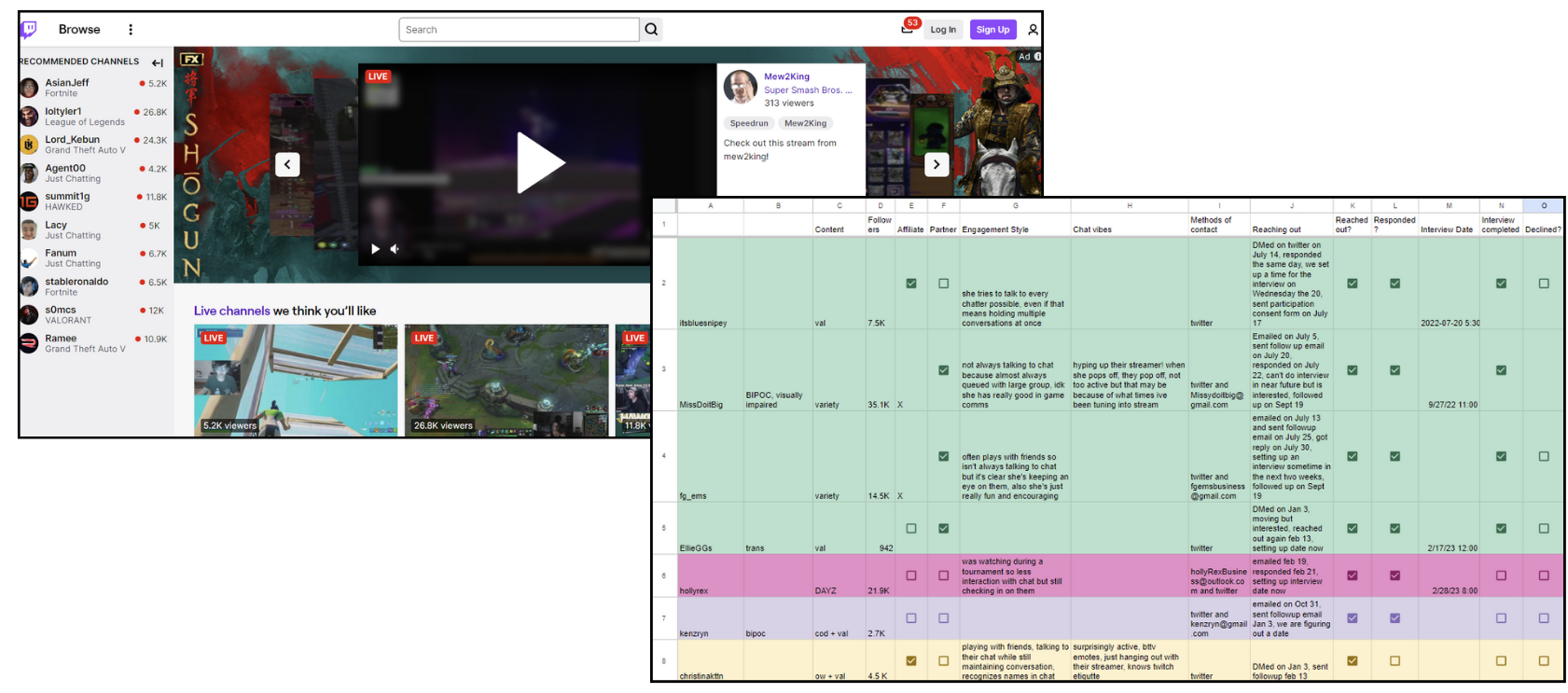
A year and a half out of college, I find myself missing exactly that, the work itself. In undergrad, I researched how Twitch streamers sustained community among their audiences, and while my research interests have naturally shifted, I still find myself reading papers, forming questions, and looking to make connections. To be clear, academia should be first and foremost associated with research, as it offers credible, rigorous, methodical work, but there’s a wealth of knowledge that comes from work done outside it. For me, independent research represents a reclaiming of the parts of scholarly work I found most compelling: open-ended questions, an iterative process, and intellectual freedom. Research is a public good that should be contributed to by anyone with genuine curiosity and methodological rigor.
Admittedly, the definition is very ambiguous
Without institutional structures, I have to identify my own frameworks and accountability measures that universities and research labs would ordinarily provide. Paradoxically, this flexibility means I can challenge the boundaries of what constitutes research. Rather than sharing my work only when it’s packaged with a nice bow, I publicly focus on the least rosy parts: what is confusing, what is frustrating, and what’s not working. Andy Matuschak calls this “anti-marketing,” the idea that sharing the hard parts of your process isn’t a weakness, it’s what makes the work honest. It is also related to the Learn in Public philosophy, to “open source your knowledge! At every step of the way: document what you did and the problems you solved.” Sharing those moments as they happen is what keeps the work alive and invites people to engage along the way.
So here is what that looks like in practice. My work specifically focuses on open-source communities, civic technology, and the policy frameworks that support them. Because I maintain multiple concurrent projects, my research questions serve a dual function: they provide scaffolding that frames each project while deepening my understanding of the thematic connections across my portfolio. The research itself will be available through writings like this, project documentation, and prototypes.
Myths and Questions
Are you being paid?
What makes Andy Matuschak’s reflection so interesting is that he crowdsourced funding for his research. Another great example is Nadia Asparouhova, who was funded by Protocol Labs and the Ford Foundation to write her book on open source. But as Nadia also said, “At each point between phases, I didn’t know where my next source of funding was going to come from.”
For me, it’s simpler than that. I like stability and have a great full-time job. Also, my research is closely tied to my personal projects, many of which are collaborative and move on timelines influenced by other people and factors outside my control. That’s actually why the “learn in public” approach works so well here. A funded researcher has to produce something by a certain date. I just document the process as it unfolds. And as corny as it sounds, I really do believe being paid in knowledge is, in most cases, more valuable than money. But if you are interested in independent research and want funding, check out New Science.
Are you just mad you’re not in academia?
No :) In fact, one day, I would like to return to academia to pursue a higher degree, either a master’s or a PhD. That’s been a goal of mine since sophomore year. I see independent research not as a rejection of academia, but as a way to keep engaging with it on my own terms in the meantime. Academia isn’t the only path to research, and for those who can’t or don’t want to be in it, that shouldn’t be the end. As Nadia also said, “The most important thing that I think academia has to offer is giving researchers a stable career path to explore long-term questions…Working independently was useful to me in earlier stages of research.”
Isn’t independent research just a Substack?
Substack is a medium for public commentary. Independent research is a method for knowledge creation. My work will focus on generating original insights through interviews, small-scale experiments, and triangulation across multiple sources. While it’s public-facing, the goal is to communicate something new.
So here’s to the formal start of this journey. At the end of the day, it all comes back to what pulled me in the first place, curiosity, and now I get to explore it more freely than ever.