The Productiveness of Failure in Civic Tech
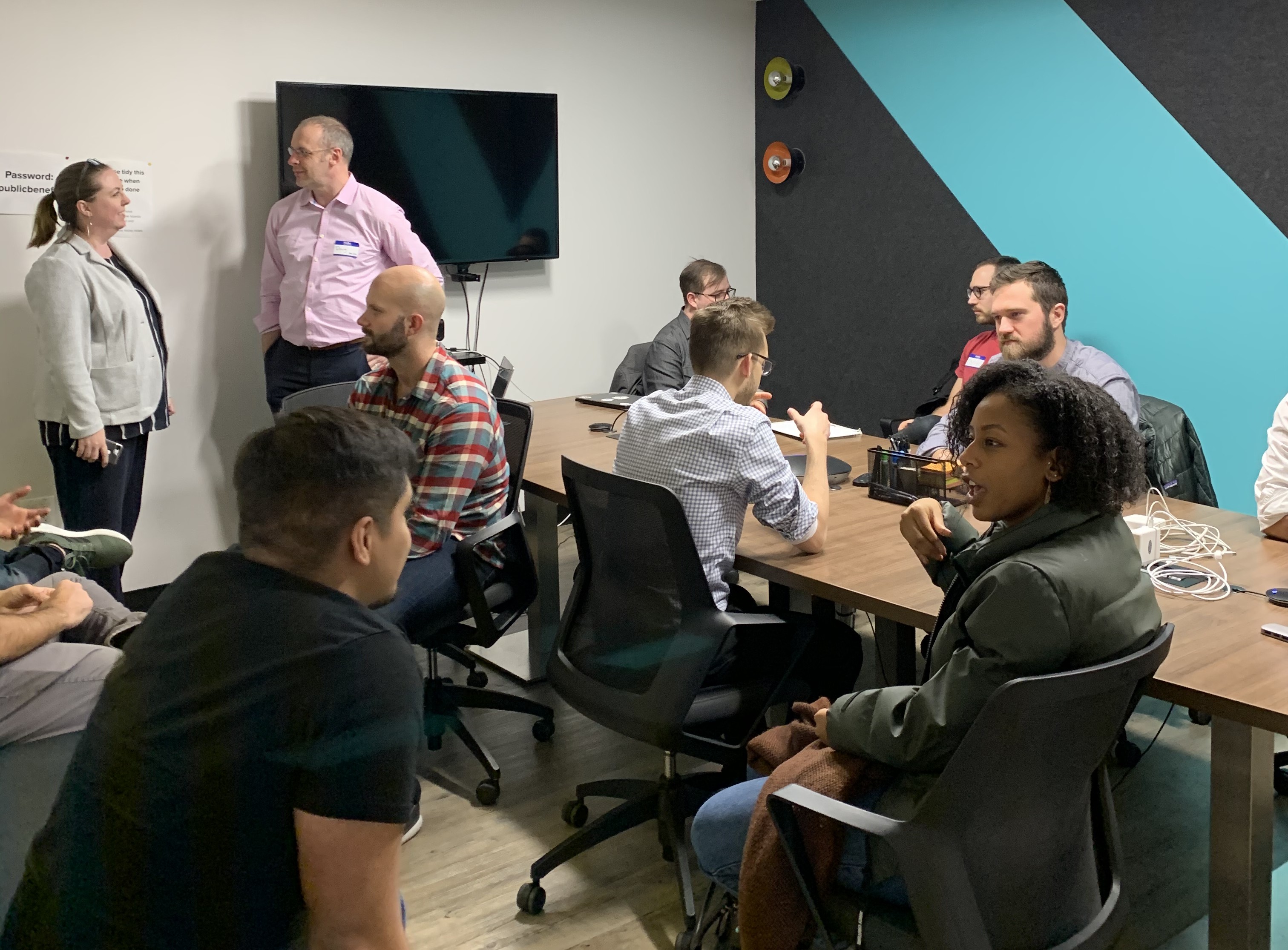
One thing I am deeply interested in within the civic tech community is failure. In a volunteer-run organization like Civic Tech DC, it seems more fragile because it depends on volunteer energy, shifting availability, and uneven capacity. People can step away at any time. Projects can lose momentum. Partnerships can overreach. In that sense, the organization is always somewhat vulnerable.
At the same time, Civic Tech DC is less likely to fail because it is not explicitly tied to business metrics and finances. It can survive organizational and leadership changes because its value is not only in outputs, but in providing a space where people can test ideas and build relationships. That flexibility mattered when Code for America which CIvic Tech DC was originally part of as part of its Bridgate program, ended its program in 2023. Rather than disappearing, it adapted into its independent, community-driven nonprofit. It is just really interesting to think about what failure means in this sense.
Its also interesting to look at failure at the project level. At Civic Tech DC, projects are given structure and guidance, but they are largely expected to be driven by the individual who pitched the project idea. That means some projects take off with wild success and some quietly disappear. But I wouldn’t define failure as a negative outcome.
There are several reasons why a project may appear to have “failed” but is actually beneficial.
-
The project was not needed: Sometimes doing work on the project reveals that the proposed solution is poorly scoped or targeted at the wrong problem. This is still useful as discovering early that a tool does not need to exist can save time and energy. In that sense, stopping is not failure; it is learning and walking away may be the most responsible outcome.
-
The project morphed: For some projects, the most meaningful impact is not the continuation of the volunteer-built tool or service being designed, but what the tool made possible. For example, ANC Finder was a tool to find your local ANC representatives, and while it is no longer active, it served as a proof of concept that the DC government later adopted into its own system. Clean Slate, a tool to support record expungement, helped clarify a legal and policy problem for lawyers at a law clinic helping people understand what could be removed from their records. In these cases, the original project may no longer be central, but it has morphed into another, more durable entity.
-
The project is small or dormant: Not every project needs to scale dramatically to matter. Some projects become dormant or pause when a lead steps back. However, that does not mean they are gone, but that they may be waiting for their next lead or a new visioning of the problem’s solutions. Civic tech projects are especially influenced by this reality because they are built by people whose participation is elective and often temporary. In this case, sustainability can be less about constant, visible momentum and more about whether the project created reusable knowledge.
The project created capacity rather than a product: Some of the most important outcomes in civic tech are intangible. A project may not “succeed” as software, but it may teach volunteers how to organize, scope a problem, or work with community partners. It may help organizers understand what kinds of documentation are missing and how to better support volunteer needs. In that way, lessons from partial or abandoned projects contribute to the long-term infrastructure of the community.
Andrea Hamm et al. explores this idea of failure in their article “What Does ‘Failure’ Mean in Civic Tech?.” They argue for the “recycling” of civic tech, or the idea that projects are rarely truly finished. While civic tech can deliver a solution; it also “provide an environment for cocreation and social innovation that brings together different stakeholders to collaborate on complex local matters in a constructive and multiperspectival way.” These conditions allows for leftover code and ideas to later be picked up and reused in new forms.
Seen this way, failure in civic tech is often not an endpoint but a transformation. For Civic Tech DC, flexibility is one of our greatest strengths in that we hold space for experiments whose value is not always visible in the final artifact.
There is a chance that down the line, Civic Tech DC might not exist. I will admit, that is slightly unnerving to think about. But by our own definition of failure, through the ideas, products, and community it has so far built, that would hardly count as one.